Başak Ersöz

PhD candidate · Politecnico di Torino

Where machine learning meets light

I study how machine learning and data science can make sense of imperfect physical measurements. My research brings together machine learning, computational imaging and experimental photonics to turn real optical data into reliable information.

Machine learningComputational imagingExperimental photonics

01 / Research

Understanding the signal.
Revealing the structure.

I have worked on appliance sensors, on vehicle networks and now on a semiconductor laser. In each case the useful question was the same: which measurements are reliable enough to interpret, and how do they turn into a decision?

01Scientific machine learning

Reliable learning from real measurements

Experimental data rarely arrive in ideal conditions. I extract statistical and derivative features from raw waveforms, then use PCA, t-SNE and DBSCAN to separate stable operating regimes from unstable ones before any classification. The recurring finding is that unstable measurements dominate the error budget: choosing which data to trust often matters more than choosing a more complex model.
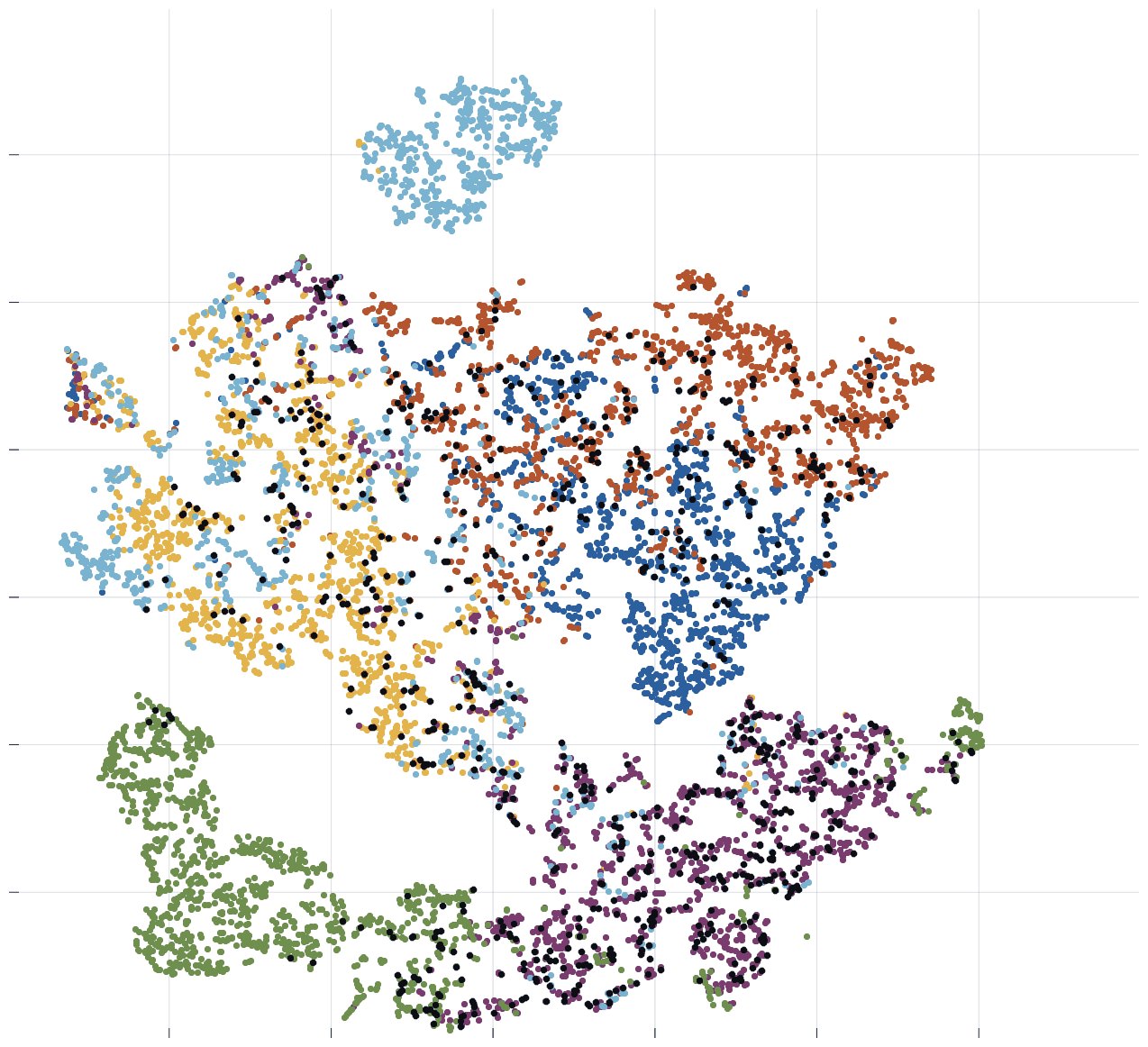
A t-SNE scatter plot of twelve thousand self-mixing measurements, coloured by target class, showing six separated groups.
Twelve thousand self-mixing measurements projected with t-SNE and coloured by target. The six targets separate reasonably well in this view.

Feature extraction (RMS, variance, peak-to-peak and derivatives) · PCA · t-SNE · DBSCAN · Regime selection · Classification · Per-class evaluation

02Applied machine learning

Learning across signals & systems

My earlier work explored LSTM-based electricity-price forecasting under volatile market conditions and ensemble methods for ECG classification. These projects connect time-series modelling with careful evaluation, from energy-market data to imbalanced signal datasets.

Time-series forecasting; recurrent networks; ensemble learning

Explore related work ↗
03Computational imaging

Images from a single detector

I reconstruct target images from scalar measurements and experimentally recorded speckle patterns. My workflows connect sensing-matrix construction and pseudoinverse or sparsity-based reconstruction with quantitative analysis of pattern count, alignment error and model–measurement mismatch. More patterns help only while the measurement model stays consistent; under misalignment, extra data can make the reconstruction worse.

Compressed sensing · Sensing-matrix design · Moore–Penrose pseudoinverse · TVAL3 and OMP · SSIM, PSNR and RMSE evaluation

Explore related work ↗
04Experimental photonics

Optical feedback & self-mixing

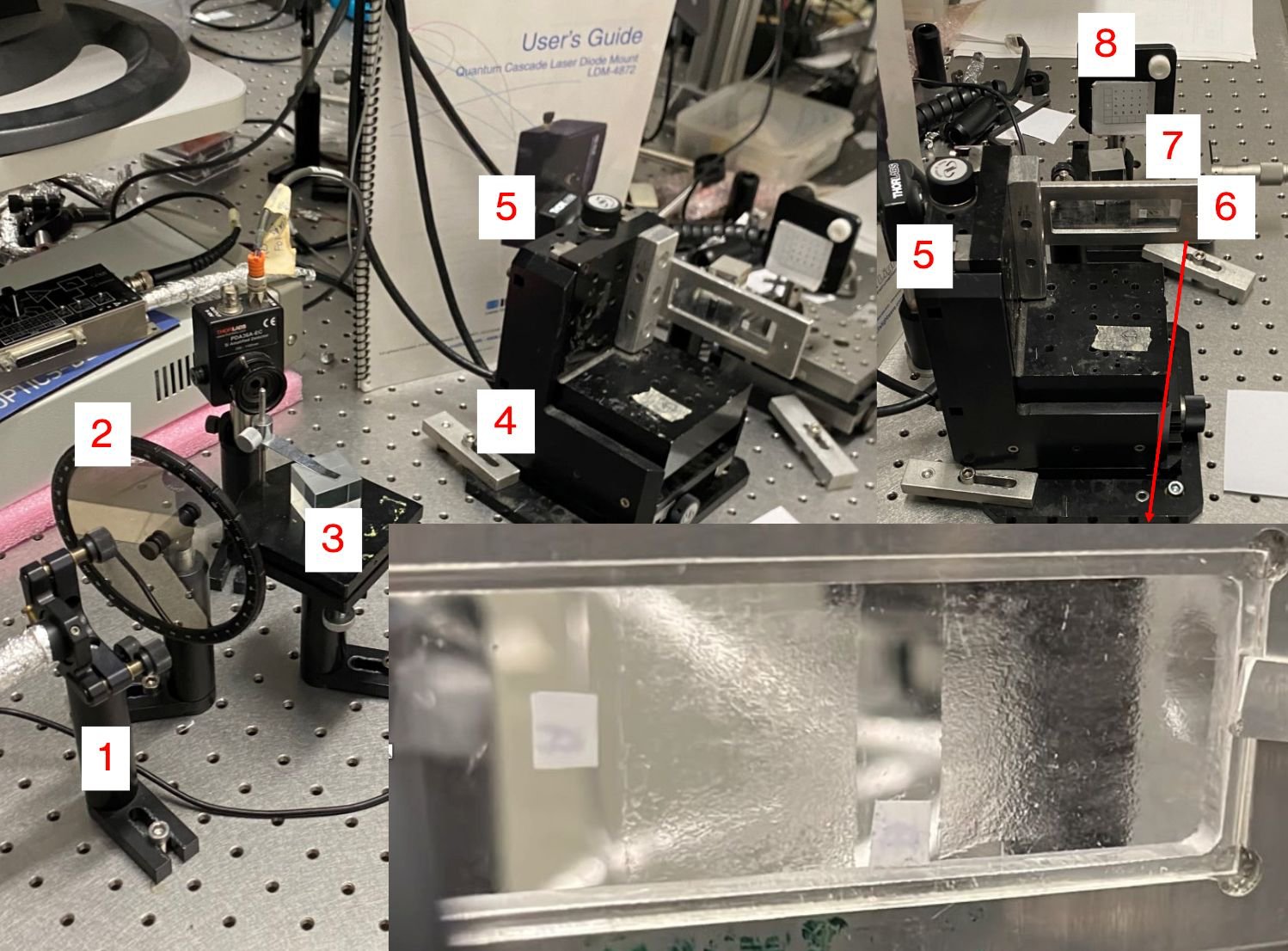
Using a semiconductor laser as both source and sensing element, I study how light reinjected into the laser cavity carries information about a target and its environment. Within MIRABILIS I record self-mixing waveforms and photodiode signals on an optical feedback bench with a nanofiber scatterer, a motorized stage and a CMOS camera, and I control the acquisition conditions that decide whether a measurement is usable at all.

The experimental self-mixing set-up on an optical table: laser, attenuator, beam splitters, motorized translation stage, CMOS camera and target, with the components numbered and the nanofiber scattering element shown in a close-up inset.
The experimental self-mixing set-up I work on. The numbered components are: (1) 830 nm semiconductor laser, (2) attenuator, (3) 90/10 beam splitter, (4) motorized translation stage, (5) CMOS camera, (6) nanofiber scattering element (shown in the bottom inset), (7) 50/50 beam splitter, and (8) target. Back-reflected light from the target is reinjected into the laser cavity, producing the measured self-mixing waveform.

Optical feedback and self-mixing · 830 nm semiconductor laser · Speckle illumination · Nanofiber scattering elements · Controlled experimental acquisition and alignment

Explore related work ↗

Current doctoral project

MIRABILIS

Optical feedback, single-pixel imaging and machine learning for compact photonic sensing. I work on an optical feedback platform built around an 830 nm semiconductor laser, a nanofiber scatterer and speckle illumination, where light reflected from the target is reinjected into the laser cavity. A PRIN 2022 collaboration between Politecnico di Torino, Università di Bari Aldo Moro and Politecnico di Bari.

02 / Selected work

Questions explored.
Findings shared.

All publications & presentations ↗

03 / About

A researcher.
An engineer.
A curious mind.

Başak ErsözExplore my background ↗

I received the B.Sc. and M.Sc. degrees in electrical engineering from Yildiz Technical University, Istanbul, Turkey. I am currently pursuing the Ph.D. degree in Electrical, Electronics and Communications Engineering with the Politecnico di Torino, Turin, Italy.

From 2018 to 2020, I was an R&D Engineer in Sensors and Mechatronics with BEKO. From 2020 to 2022, I was a Multimedia and Connectivity R&D Engineer with Ford Motor Company, where I worked on automotive connectivity systems and intelligent vehicle technologies.

With more than seven years of industrial and research experience, my research interests include AI for scientific measurement and experimental systems, data science for experimental sensing and imaging, optical sensing systems, sensor system development, smart automotive and consumer dedicated engineering applications.

Mar 2024 – present

PhD candidate · Electrical, Electronics and Communications Engineering

Politecnico di Torino

2021 – 2023

MSc · Electrical Engineering

Yıldız Technical University

2014 – 2019

BSc · Electrical Engineering

Yıldız Technical University

Scientific computing

MATLAB · Python · Simulink · SQL · C (basic) · Numerical modelling · Reproducible data processing · Scientific visualisation

Machine learning & data

PCA · t-SNE · DBSCAN · Feature engineering · Supervised and unsupervised learning · CNNs and U-Net · Autoencoders for reliability and anomaly scoring · LSTM / GRU for temporal states · Domain adaptation · Model selection · Per-class evaluation

Photonics & imaging

Self-mixing interferometry · Semiconductor lasers · Speckle patterns · Single-pixel imaging · Compressed sensing · Sensing-matrix construction · Inverse reconstruction · SSIM and PSNR evaluation · Experimental acquisition and alignment

Engineering systems

Sensor technologies · Embedded sensing · CAN · I²C · Bluetooth · Automotive connectivity · Requirements engineering · System integration and validation

05 / Approach

Reliability comes before complexity.

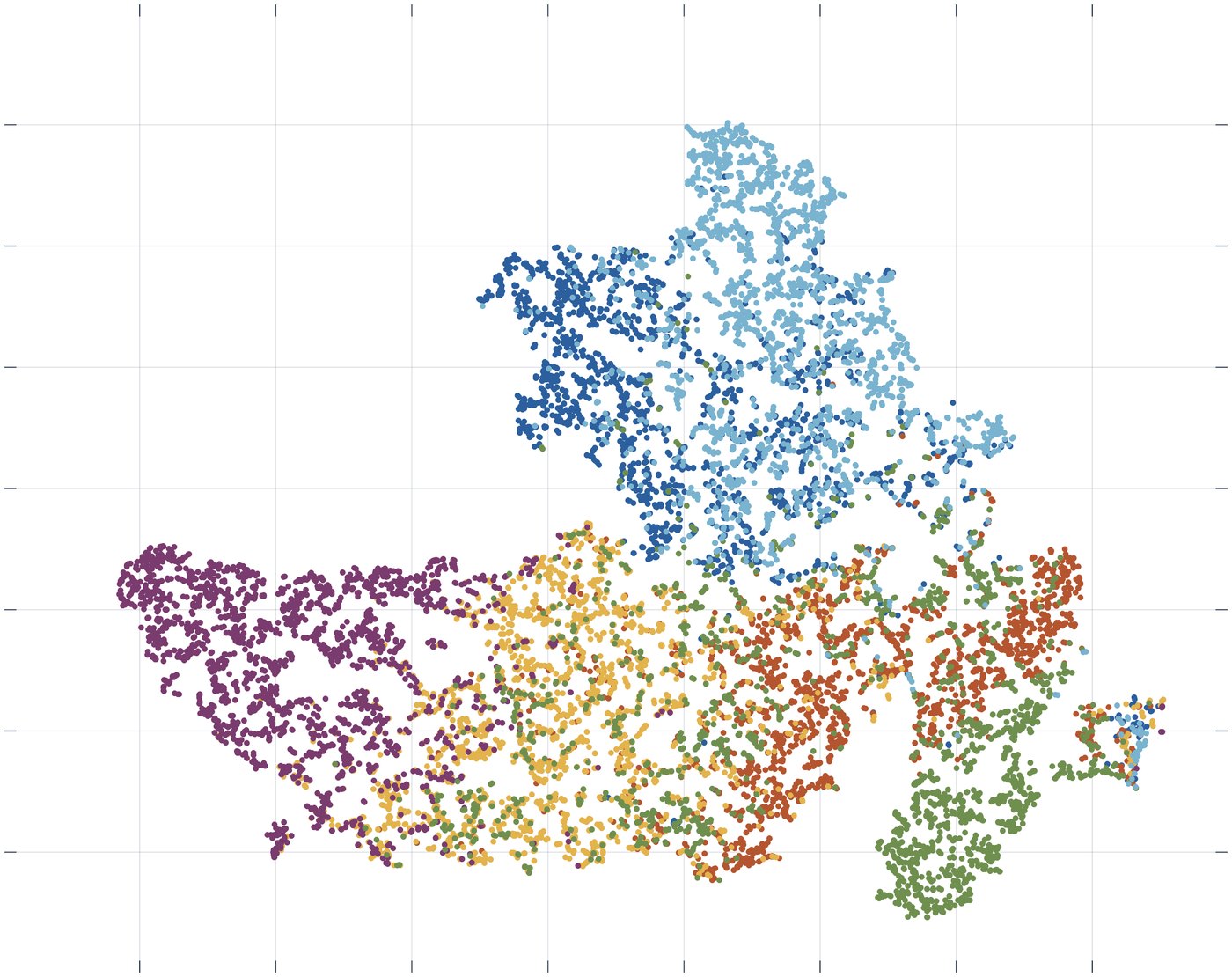
The same t-SNE map with the measurements that DBSCAN rejected drawn in black, scattered through every class.
The same measurements, with the 9.6% that DBSCAN rejected drawn in black (ε = 2.70, MinPts = 20). The rejected points sit inside every class, which is why removing them changes the result more than swapping the classifier does.

Before asking which model reconstructs or classifies best, I ask a narrower question: which measurements are reliable enough to interpret at all? In optical feedback and single-pixel imaging, alignment mismatch, feedback fluctuation and speckle decorrelation set the ceiling, and a heavier model does not lift it.

So I work the same way on every dataset. Start from an existing measurement and an existing baseline. Name the bottleneck: noise, artefacts, reconstruction, tracking or subject variability. Add one controlled alternative rather than a new pipeline. Then check whether the final useful output improves, not only the intermediate score, because that is what decides whether the method is worth keeping.

06 / What transfers

Beyond the optical bench

The transferable part of MIRABILIS is the method rather than the hardware: feature extraction on imperfect signals, reliability selection before interpretation, reconstruction under model mismatch, and decisions made under uncertainty.

The same questions come up wherever a physical measurement has to become a number someone can trust. I am particularly interested in biomedical sensing: ECG and EMG under wearable conditions, cardiorespiratory and stress monitoring, and ultrasound-derived measurements. There the useful question is usually which windows, frames or sources can be trusted, rather than which classifier to use.

Compressed sensing and biomedical source separation also share a mathematical structure. Both reconstruct information from limited, mixed or noisy measurements.

07 / Connect

Good research starts
with a conversation.

Interested in machine learning for experimental systems, computational imaging or optical sensing? I welcome conversations about research and collaboration.